How to Choose Your First Paddleboard: Inflatable vs Hard Board

Stand on a paddleboard on a still morning and it looks like the simplest sport in the world. Then you start shopping, and the choice lands in front of you: inflatable or hard? One packs into a rucksack, the other lives on your roof bars. Both will get you on the water, and neither is the "right" answer for everyone. What matters is matching the board to the water you'll actually paddle, the car you own, and the space you can spare at home.
Before comparing materials, be honest about where you'll spend most of your time. A sheltered canal, a quiet lake and a small estuary are forgiving places to learn. Open coastal water with chop, tide and a breeze is not, and the board that feels steady in one can feel twitchy in the other.
Wind is the factor beginners underestimate most. On an inland lake you may be fine paddling out with the breeze behind you, then find the return leg far harder than expected. If your local water is often breezy and exposed, lean towards a wider board with more volume, whatever it's made of.
Stability comes from three things: width, thickness (which adds volume) and how much you weigh relative to both. A beginner-friendly board is usually around 10 to 11 feet long, roughly 32 inches wide and 5 to 6 inches thick, with a rounded nose and a wide tail. Shorter or narrower boards will feel less settled.
Inflatables have a reputation for being more forgiving, and often they are, simply because that beginner shape is so common in inflatable ranges. But a rigid board of similar width and volume is generally just as stable, and sometimes more predictable because the hull doesn't flex underfoot.
Most wobble on an inflatable traces back to under-inflation. Inflate to the pressure printed on the rail — commonly somewhere between 12 and 18 psi depending on the board — and top it up after ten minutes, because cold water and a warm afternoon both change things. A pump with a pressure gauge is worth the small extra cost. If a board feels soft in the middle when you press it, it isn't ready yet.
This is where the two genuinely diverge, and it decides the answer for a lot of people.
If you have a small car, a flat with limited space, or you want to paddle in different places each weekend, the inflatable wins on practicality before performance even comes into it. If you have a garage, a short drive to the water and paddle the same spot every week, a hard board is no bother at all.
Inflatable packages generally cost less and usually include the paddle, pump and bag, which is why so many first boards are inflatable. Hard boards typically cost more, and then you add a paddle, a board bag and roof bars on top.
Cheap inflatables are where beginners get caught. A single-layer board that sags in the middle will paddle slowly, track poorly and put you off the sport. Look for drop-stitch construction, a stated maximum pressure and a rider weight limit comfortably above your own. Buying a decent used board from a known brand is usually a better move than a new bargain you can't identify.
Resale is worth a thought. Rigid boards tend to hold value reasonably well; inflatables depreciate faster, especially once the bag and pump have been lost. Set a total budget that includes a buoyancy aid, a leash and a dry bag, not just the board.
On flat, sheltered water, a good inflatable is perfectly capable and pleasant. Push further, though, and the differences show.
A rigid hull glides further per stroke, tracks straighter and cuts through chop instead of riding over it. If you're drawn to touring distances, racing, or surfing small waves, a hard board will reward you far more, and the stiffness matters most in exactly those conditions.
The flip side is damage. Inflatables bounce off rocks and jetties; a hard board chips, cracks and needs proper repair if you drop it on the car park. Inflatables can puncture, but a repair patch and a few minutes usually sorts it.
Hire or borrow before you commit. An hour on a hire board at a local lake will tell you more about width and volume than any spec sheet, and many centres run demo sessions where you can try several boards in one go. A beginner lesson is money well spent too, particularly on safety: how to fall, how to get back on, and how to read wind and tide.
Whatever you choose, wear a buoyancy aid, use a leash appropriate to the water, check the forecast, and tell someone where you're going and when you'll be back. Many inland waterways in the UK need a licence or permit, often covered by a paddling membership or a day ticket — check before you launch. If you have a heart condition, a shoulder injury or any other health concern, speak to a doctor before starting.
Buy for the paddling you'll really do, not the paddling you imagine. A board that's easy to transport, store and inflate is a board you'll use every week, and that matters far more than the material it's made from.
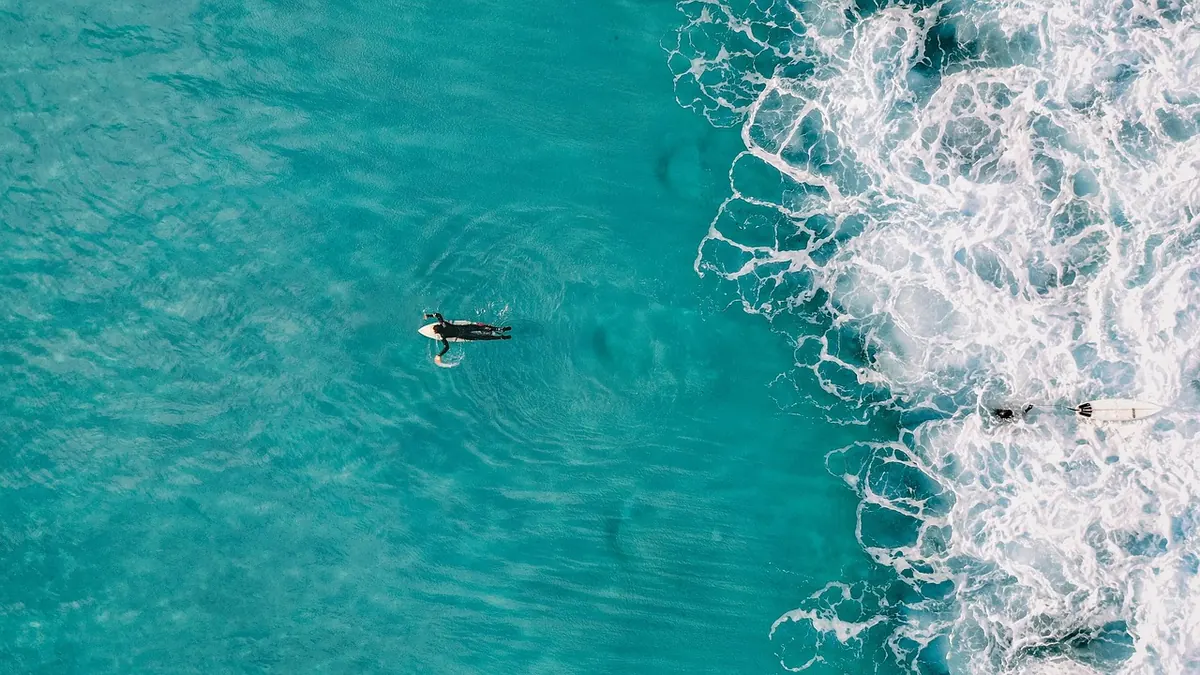
Photo: TheOtherKev / Pixabay
Previous Post
Cold-Water Swimming in the UK: A First-Timer's Safety Checklist
Next Post
A Beginner's Guide to UK Rockpool Marine Life